Rubble stone foundation repair
Restoration of fieldstone and limestone foundations of houses and ancient buildings: repointing with lime mortar, consolidation injection, structural repair and waterproofing. Guaranteed work carried out by an RBQ certified contractor. License 4.1
00:00
/
00:00
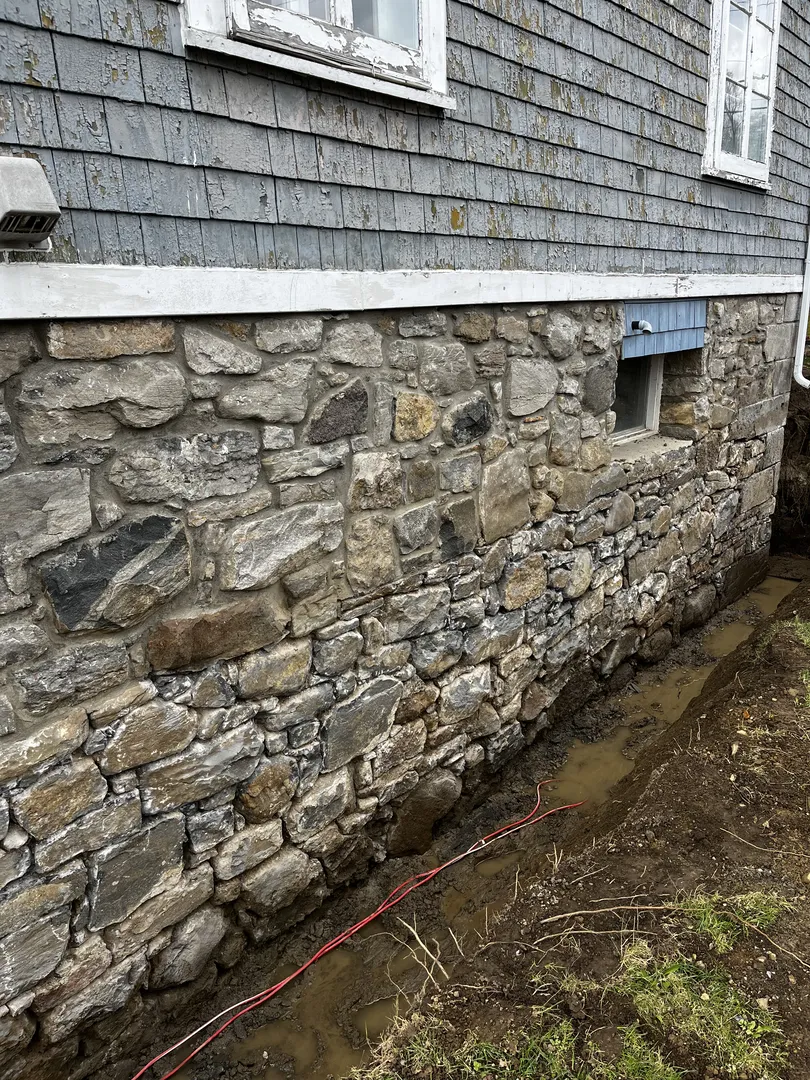
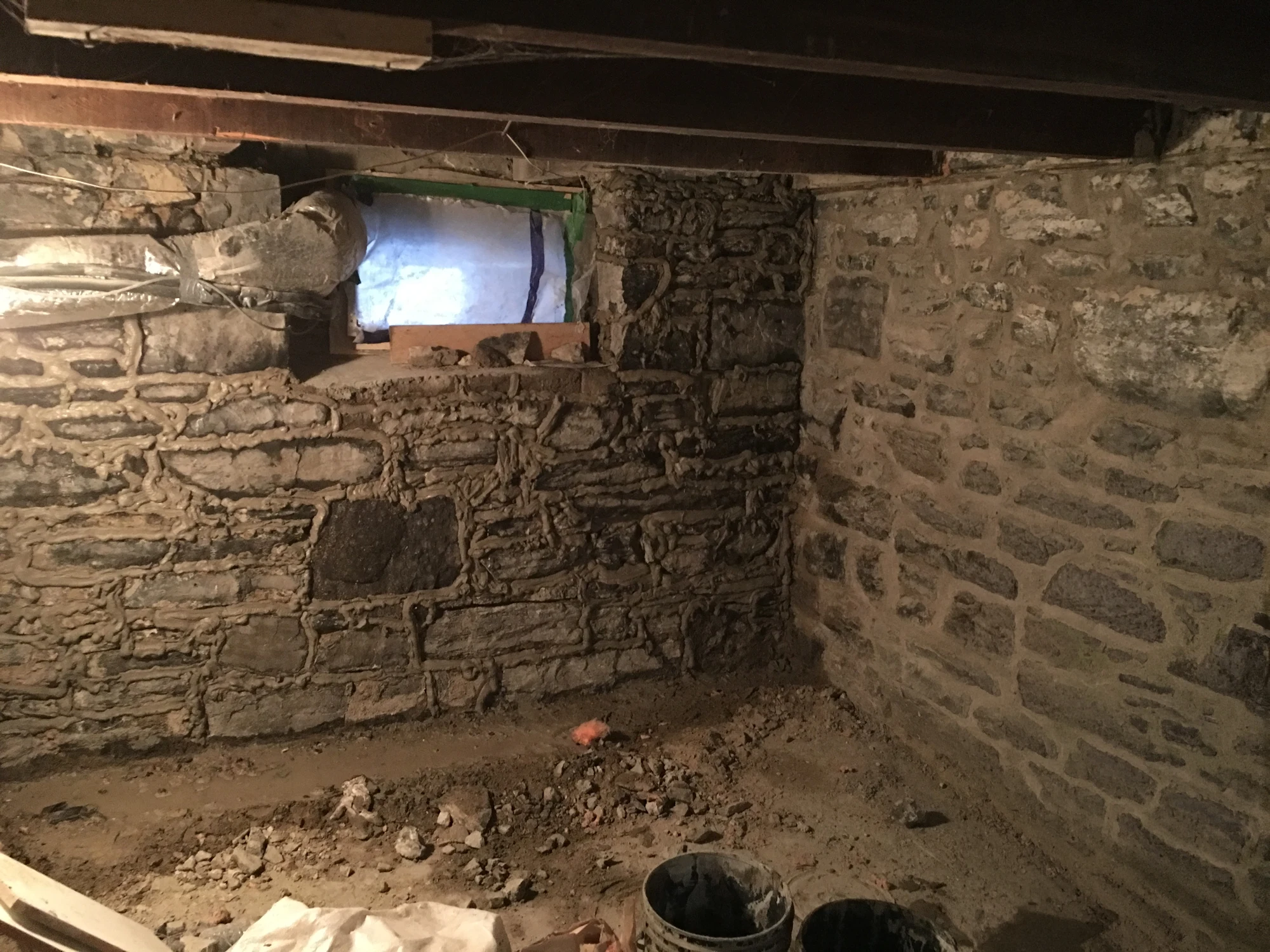
Complete restoration of the ancient stone foundations
Montreal's heritage houses and buildings built before 1925 rely on foundations made of rubble stone, fieldstone or limestone. Whether it is crumbling mortar, persistent water infiltrations or a necessary structural recovery, we intervene. After 100 years, stone is rarely the problem. It's almost always the mortar.
The problem: the majority of foundation contractors hold the concrete license (4.2) and apply Portland cement to the stone. Portland is too hard, blocks moisture, and causes rocks to burst in frost. MBNL works with the right materials and the right techniques because that's what our 4.1 license and our training in heritage masonry restoration require — and because it's the only approach that lasts.
OUR INTERVENTION
WARNING SIGNS
A joint that crumbles, a crack that widens, water that comes back to the same place. They are signals. The longer you wait, the heavier the intervention and the more the bill goes up. Here's what to look out for.
CRACKS IN THE BASEMENT
Horizontal or stepped cracks in foundation walls.
RECURRENT INFILTRATIONS
Water or humidity that comes back, especially in spring and fall.
CRUMBLING MORTAR
The joints between the stones fall into powder when touched.
LEANING WALLS
Basement walls that bulge, slope, or have a slope.
PERSISTENT SMELL OF HUMIDITY
Musty odor or presence of mold in the basement.
Our projects, our results
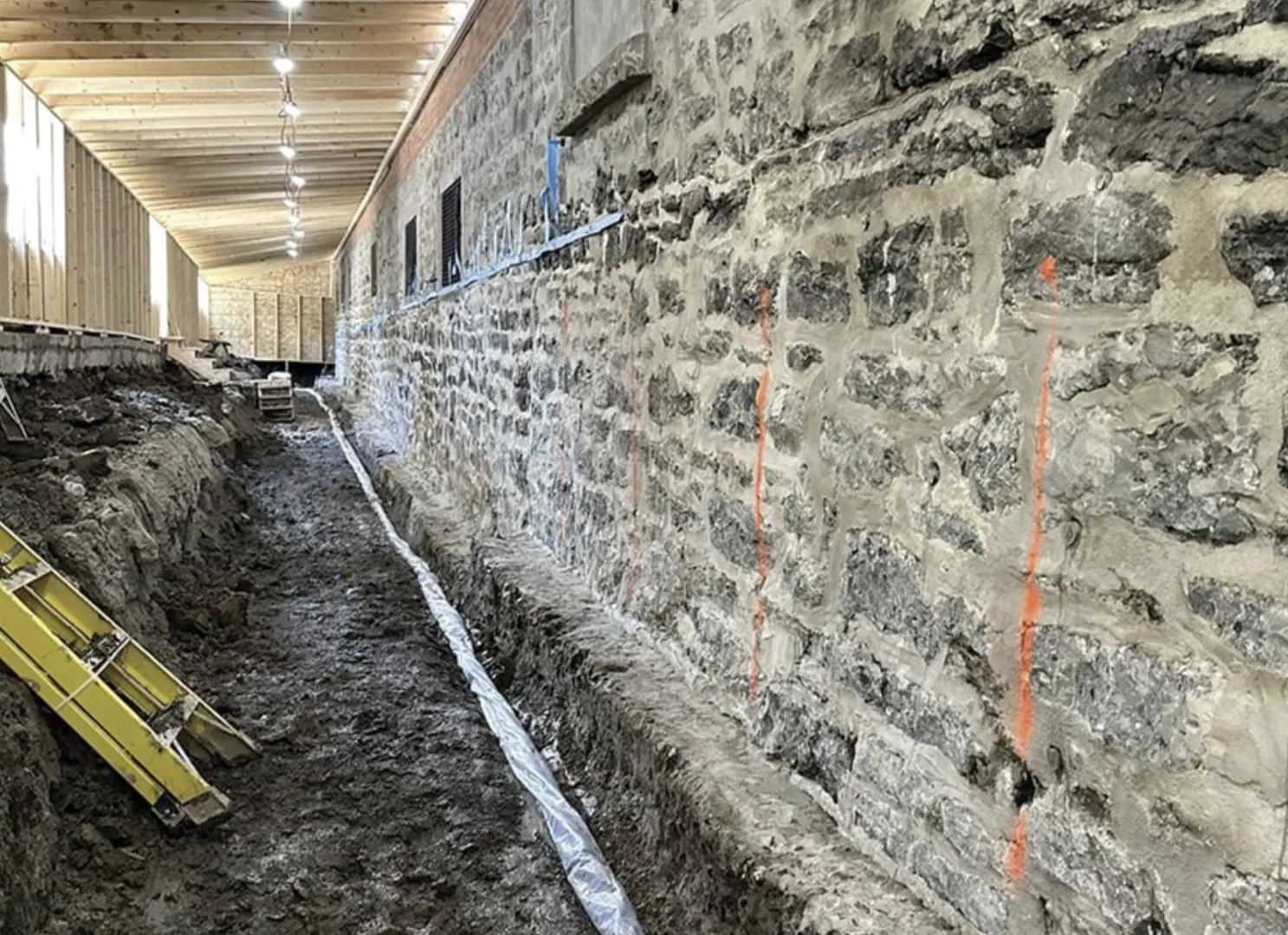
Your foundation in good hands
Your foundation regains its load-bearing capacity for the next 50 years, with the right materials, in the right hands. No patch. No return in 3 years.
TRAINED BY THE BEST
Our expertise comes from the largest commercial projects in Quebec.
MENTORED BY THE PIONEERS
Formed directly by the founders of the AEMQ. Same standards.
RBQ 4.1 license active
The only license that authorizes work on stone. The majority of foundation contractors only hold the concrete license.
UNIVERSITY EDUCATION IN STRUCTURE
Our construction site decisions are based on materials science.
WE KNOW YOUR NEIGHBORHOODS
Each era of construction, each type of brick, each local regulation.
DIAGNOSIS BEFORE QUOTATION
Free on-site inspection. We tell you what we see, not what we want to sell.
Everything you need to know about the rubble stone foundation
Why is it mandatory to use lime mortar for rubble foundations?
Ancient stones are porous and need to “breathe.” A regular Portland cement mortar is too rigid and impermeable: it focuses tension on the stones rather than absorbing them, causing fractures in the stone itself. This damage is often irreversible and expensive to correct. The lime mortar, more flexible and more permeable to water vapor, is the only material compatible with ancient rubble. MBNL exclusively uses lime mortar for this type of foundation.
Is work on rubble foundations guaranteed?
Yes MBNL offers a written guarantee on the work carried out on the rubble foundations. The conditions of the guarantee are specified in your estimate before the start of the work.
Can rubble foundations last a long time if they are well maintained?
Absolutely. Properly maintained rubble foundations can cross centuries. Conservation work (lime repointing, grouting into cavities, appropriate sealing and reinforcement as required) considerably prolong their lifespan and cost much less than a complete concrete replacement. Contact us to find out if your foundation requires intervention.
What are the most common problems with rubble foundations?
Common issues include:
- Fissures in stone or mortar under the effect of freezing and compaction
- Water infiltrations by damaged joints or cracked stones
- Mortar crumbling caused by the use of incompatible cement mortars during previous repairs
- Bulging or spilling Walls, a sign of a more serious structural problem
Early diagnosis makes it possible to treat these problems before they require major work. Call us at 438.225.2169 for a free inspection.
Is it absolutely necessary to install exterior drainage for a rubble foundation?
Not necessarily. Outdoor drainage was not a construction requirement before the 1950s in Quebec, and many rubble foundations have worked without it for decades. Our experts assess whether the addition of drainage is appropriate according to the condition of your foundation, the topography of the land and the nature of the infiltrations observed. Ask for your free diagnosis At 438.225.2169.
What is a rubble stone foundation and in which buildings is it found?
Rubble foundations are built of natural stone (limestone or granite) bonded to mortar. They are mainly found in houses that are built. Before 1925 in Quebec. These foundations have been tried and tested for centuries, but they require appropriate maintenance, including a mortar compatible with ancient stone.
PROTECT YOUR FOUNDATIONS BEFORE IT'S TOO LATE
Cracks and water ingress don't wait. Get an honest assessment of the condition of your rubble foundations and a clear work plan, without surprises. Contact MBNL for a free quote.
Masonry services
Discover all of our masonry and concrete services